
Weeks 1–2
Pain
Calm the pain down.
Hands-on care, swelling management, and activity changes settle the irritated joint so walking gets easier.
What We Treat
Taking the stairs one at a time. Grabbing the armrest to get up from a chair. Your knee doesn’t have to be the thing that decides your day.
Sound Familiar?
Two or more? Keep reading.
Why It Happens
The knee often takes the blame for problems above and below it. Weak hips let the knee drift inward with every step. Tight thighs and calves pull on the kneecap. Stiff ankles push extra stress up the chain. And inside the joint itself, cartilage wear, a meniscus tear, or a sprained ligament can all add to the picture.
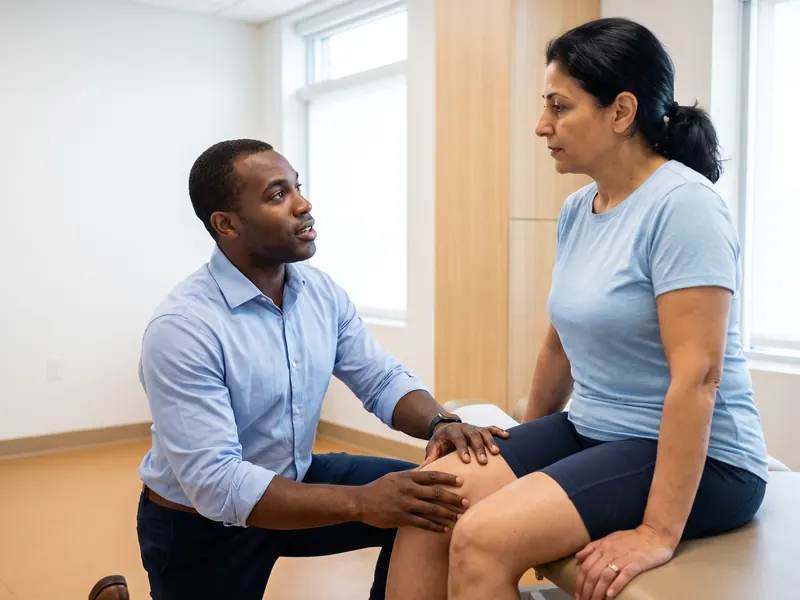
That’s why rest and a knee sleeve rarely fix it. A cause-first evaluation looks at your knee and also your hip, ankle, and how you move, so we treat what’s actually overloading the joint.
The Honest Truth
Nobody regrets starting too early.
How We Fix It
Here’s what the four phases look like for a knee.
Weeks 1–2
Pain
Hands-on care, swelling management, and activity changes settle the irritated joint so walking gets easier.
Weeks 2–6
Prime
Mobility work restores full bend and straighten, plus the hip and ankle motion your knee depends on.
Weeks 6–10
Perform
Progressive thigh and hip strengthening gives the knee the support it needs on stairs and squats.
Weeks 10+
Prevent
Stairs, squats, and sport-specific movement get tested under real load before you’re cleared.
Outstanding. Highly recommend. Very knowledgeable. In areas of health Treatment an physical therapy.
Veeshonna D. · Google review
Questions, Answered
Usually not. Many knee problems can be sorted out with a hands-on evaluation, and imaging often shows changes that don’t explain the pain. If anything in your exam suggests you need imaging or a surgeon’s opinion, we’ll tell you and help you get it.
Yes. Rehab after knee surgery, including joint replacement and ligament repair, follows the same four-phase approach. We work with your surgeon’s protocol to restore motion, rebuild strength, and get you back to walking, stairs, and the activities you care about.
It depends on what’s driving your knee pain and how long you’ve had it. Your plan runs through four phases, Pain, Prime, Perform, and Prevent, and you’ll always know which phase you’re in and what’s left.
Book Your Visit
Request a time and we’ll call you back to lock it in. No phone tree. Just a plan.
4.9 · 9 Google reviews
Personal injury & workers’ comp welcome
Step 1 of 5
That’s the hard part done. We’ll call during business hours to lock in your time.
Visit Us